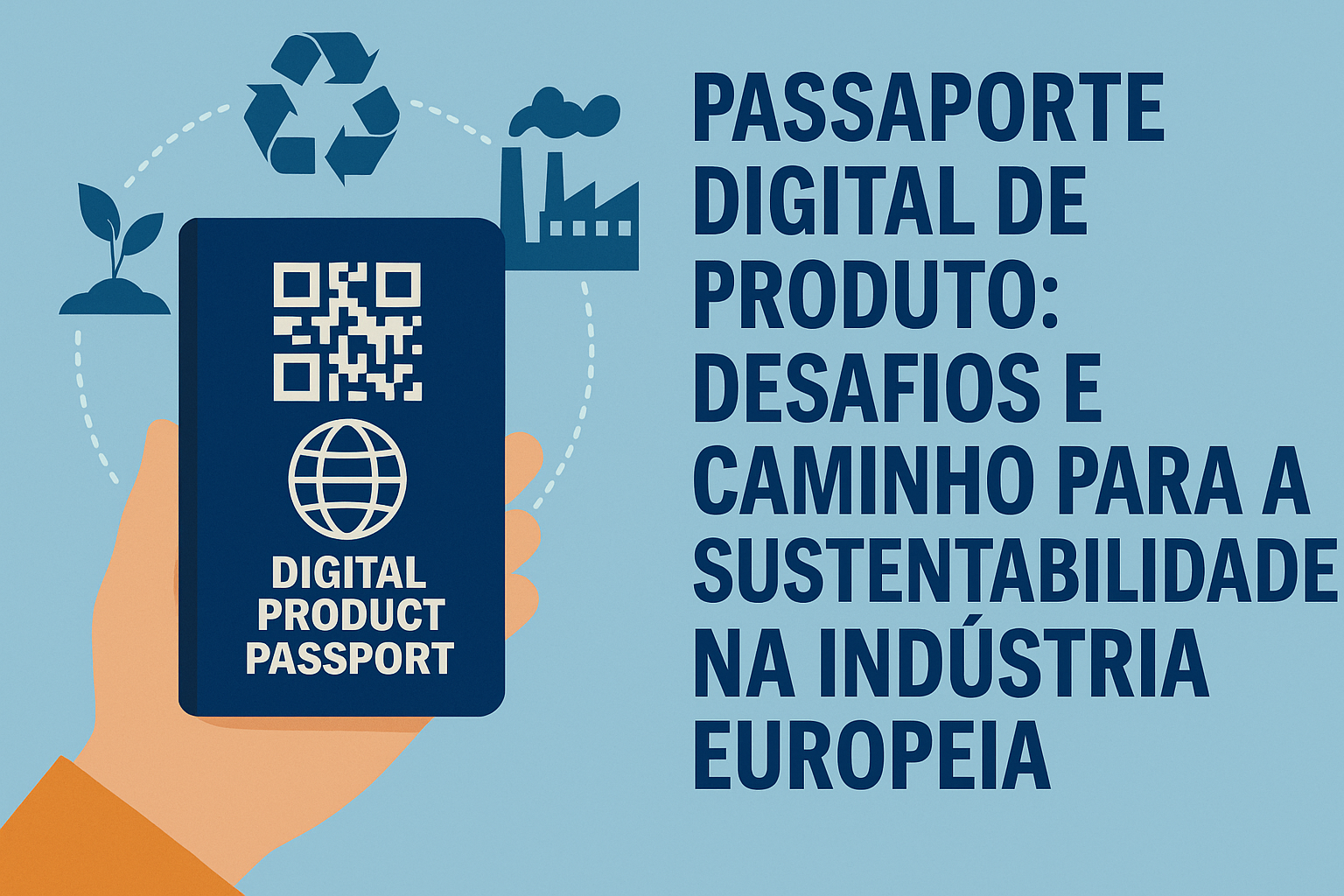
Digital Product Passport: Challenges and the Path to Sustainability in European Industry
The Digital Product Passport Report, published by the European Commission, is the result of a collaborative effort within the SME Envoys Network, led by Portugal and Sweden in the field of Sustainability. The document brings together the findings of two surveys – one institutional, directed at the Network, and another aimed at Business Associations – as well as insights from three national Focus Groups representing the Textile and Footwear, Electronics and Batteries, Metallurgy and Automotive, Construction, and Ceramics sectors.
What is the Digital Product Passport?
The Digital Product Passport (DPP) aims to ensure that products placed on the European market are sustainable, enabling greater traceability and transparency throughout the product lifecycle. This initiative is part of the EU’s Ecodesign Regulation, promoting repairability, recyclability, and informed decision-making by consumers and businesses.
Identified Challenges
The report highlights significant obstacles to the implementation of the DPP, especially among small and medium-sized enterprises (SMEs), including:
- Lack of data standardisation across sectors;
- High implementation costs for SMEs;
- Shortcomings in technical and digital capacity;
- Need for legislative harmonisation at the European level;
Solutions and Recommendations
To facilitate the effective adoption of the DPP, the report proposes:
- Development of accessible digital infrastructures for SMEs;
- Financial support and technical training programmes tailored to sectoral needs;
- Promotion of interoperable standards between platforms and countries;
- Partnerships with technology providers and innovation centres;
Strategic Relevance for Portugal
Sectors such as Textile and Footwear, Automotive, and Ceramics, which are strongly represented in Portugal, will need to quickly adapt to the digital and environmental requirements of the new regulation. Implementing the DPP may represent a competitive advantage for Portuguese companies that act proactively, anticipating regulations and investing in digitalisation and sustainability.
Next Steps
The European Commission will continue to promote public consultations and cross-sector collaborations to ensure the DPP is fully operational by 2027. AIDA CCI will monitor legislative developments and organise information sessions for the regional business community.
Useful documents and resources: